Hey y'all! I've talked to one or two of you about knowledge bases before, but when you are working on a project how do you manage it and progress? Do you have a cohesive "place" to put information or thoughts or tasks, and if so does it depend on the exact project?
I talked to a friend about side projects once and he said the big things for him was using a useful issue tracker for his particular work, and then to have all of your projects fit into a cohesive "theme" (for him, it was particular type of coding work in a particular language). Do you feel this fits with y'all?
paralogue.org
Another side story — static archive
Project management tools
assailant
Posts: 56
Joined: Tue Apr 30, 2024 00:35 UTC
Joined: Tue Apr 30, 2024 00:35 UTC
Posted: Sat Jun 15, 2024 18:15 UTC

truant
Posts: 132
Joined: Mon Apr 29, 2024 22:42 UTC
Joined: Mon Apr 29, 2024 22:42 UTC
Posted: Sat Jun 15, 2024 21:04 UTC
I switched from org-mode to using apple Notes for everything. I keep notes and todo lists on whatever I have closest to me, either on my phone or on my macbook, and hand-rewrite stuff to transfer between devices. I always liked the idea of a commonplace book, which was like a precursor to zettlekasten in a way, but instead of your database being a 'place' its an object you can carry around. I try to keep myself able to write stuff down when it hits me, so it has to be easy and avalible. Im so stubborn
are the party rockers in the room with us right now?

eternement hana
Posts: 102
Joined: Mon Apr 29, 2024 22:21 UTC
Joined: Mon Apr 29, 2024 22:21 UTC
Posted: Sun Jun 16, 2024 02:27 UTC
i'd definitely be interested in any suggestions for time/task management, if anyone has any! i guess for me the project-planning part isn't too bad – at least at the scale that i usually work at – but i've gotten really bad at structuring the spare time i do have toward completing them.
for handling the knowledge side i've always just stuck with notebooks – originally evernote, and after a few hops now obsidian. it's easy enough to make a folder and start dumping thoughts in there, and as the idea starts to congeal you can start organizing the pieces from the notes you've already written by linking them together. i like how obsidian makes this extremely convenient, though i remember using roughly the same approach back when i was using evernote too.
on an abstract level, notetaking methodologies do fascinate me and i like learning about new ones, though i find it hard to subscribe to any of them absolutely. or, i find it hard to believe that structuring my notetaking slightly differently will be the thing that turns me from country bumpkin to richard feynman, despite what the sales pitches claim. the one i've found that resonates with me most is the linking your thinking approach, and i really click with the concept of MOCs (maps of content). though i just call them maps, because MOC felt too buzzwordy and matome is a touch weeby and nothing else quite seemed to fit. but i've found these to help a lot for keeping a top-down view of a project at-hand.
for handling the knowledge side i've always just stuck with notebooks – originally evernote, and after a few hops now obsidian. it's easy enough to make a folder and start dumping thoughts in there, and as the idea starts to congeal you can start organizing the pieces from the notes you've already written by linking them together. i like how obsidian makes this extremely convenient, though i remember using roughly the same approach back when i was using evernote too.
on an abstract level, notetaking methodologies do fascinate me and i like learning about new ones, though i find it hard to subscribe to any of them absolutely. or, i find it hard to believe that structuring my notetaking slightly differently will be the thing that turns me from country bumpkin to richard feynman, despite what the sales pitches claim. the one i've found that resonates with me most is the linking your thinking approach, and i really click with the concept of MOCs (maps of content). though i just call them maps, because MOC felt too buzzwordy and matome is a touch weeby and nothing else quite seemed to fit. but i've found these to help a lot for keeping a top-down view of a project at-hand.


unitary truant
Posts: 190
Joined: Sat Apr 27, 2024 22:57 UTC
Joined: Sat Apr 27, 2024 22:57 UTC
Posted: Sun Jun 16, 2024 02:43 UTC
It's a broad question for me. There's a few dimensions to getting something accomplished and it overlaps with our own lives a lot.
Let's start with tasks. I use a lot of GTD in my life -- OmniFocus on Mac, and I have an Android app that syncs with it, though I haven't found something to overlap on Windows. I organise things by project and try to ballpark an expected time for things to be done at the latest. Obviously if something can be done in a few minutes, it should be done now; but if something is just looming over my head, it needs to be put away in a system somewhere.
For projects across teams, there's subtasks and processes. The whole project has aspects owned by somebody, but they can be parallelised, and the key is just knowing how to best sequence everything so that ideally it's done as quickly as possible, right? So if I can write a section while the asset sheet for the previous section is being dealt with, then I can prepare the next asset sheet at the same time as I'm implementing the assets I just received, and the game fills out. But there's a constant crosstalk that you need for a creative project to be done well. People need to see what's there, and what other people are producing, in order to best get a sense of the tone, of the feel; so there's an ongoing process where you have to share what you have and get a reaction from everyone else.
Otherwise: I like to use bibles, whether in TiddlyWiki or Notion or whatever, so that there's one area where people see aspects about characters, the timeline of the story, what overlaps with what else, appearances of characters in different scenes (numbering scenes also helpful!), etc.
For what I'm working on now, I wish all of these things were in place; if it were my full-time job, it likely would be. But as we're all just doing this in our spare time, it's more loose, more act-by-act...
Let's start with tasks. I use a lot of GTD in my life -- OmniFocus on Mac, and I have an Android app that syncs with it, though I haven't found something to overlap on Windows. I organise things by project and try to ballpark an expected time for things to be done at the latest. Obviously if something can be done in a few minutes, it should be done now; but if something is just looming over my head, it needs to be put away in a system somewhere.
For projects across teams, there's subtasks and processes. The whole project has aspects owned by somebody, but they can be parallelised, and the key is just knowing how to best sequence everything so that ideally it's done as quickly as possible, right? So if I can write a section while the asset sheet for the previous section is being dealt with, then I can prepare the next asset sheet at the same time as I'm implementing the assets I just received, and the game fills out. But there's a constant crosstalk that you need for a creative project to be done well. People need to see what's there, and what other people are producing, in order to best get a sense of the tone, of the feel; so there's an ongoing process where you have to share what you have and get a reaction from everyone else.
Otherwise: I like to use bibles, whether in TiddlyWiki or Notion or whatever, so that there's one area where people see aspects about characters, the timeline of the story, what overlaps with what else, appearances of characters in different scenes (numbering scenes also helpful!), etc.
For what I'm working on now, I wish all of these things were in place; if it were my full-time job, it likely would be. But as we're all just doing this in our spare time, it's more loose, more act-by-act...

We don't care what you say but we care what you do.
We’re the invisible entity that looks out for you.
entrant
Posts: 2
Joined: Tue Apr 30, 2024 14:45 UTC
Joined: Tue Apr 30, 2024 14:45 UTC
Posted: Fri Jan 17, 2025 19:53 UTC
It definitely matters what the task and aforementioned 'theme' is. I believe that for most knowledge, if one uses the Zettelkasten method, or any of its relatives, it's quite important to have 'large' collections. For non-Zettelkasten-esque methods, I can't say I have much experience.
I keep my work-related research, my mathematics research, my software development notes, and my meeting notes in one Obsidian vault. I keep a Kanban board for my project in a file, which acts as a general guidepost for 'what do I do next?'

I also keep a 'table of tasks' note that automatically collects all my TODOs from my vault and lists them based on when they're due. One big issue with this setup is that it's not capable of connecting to any form of notification service, and give me reminders of what tasks need to be done. As a result, I keep my personal TODO lists on Google Tasks / Tasksboard, and if I have anything important work-wise, I also use a work-related task list. I am still in the process of trying to de-Google my personal computing, so I plan on eventually replacing Google Tasks with something self-hosted.
For personal research, journaling, and any form of sysadmin administration I need to do for my home network (writing down IP tables, processes, documenting my setup) I like to use Logseq. It's an Obsidian-like knowledge manager project, but it's FOSS. It's still quite early in its development, so I don't want to use it for anything that requires a lot of extensions, but I hope the project will grow and eventually bloom into a new standard for non-linear note taking.
All of this, of course, is also available on my phone, so I'm never really without the means to write down some quick notes.
I keep my work-related research, my mathematics research, my software development notes, and my meeting notes in one Obsidian vault. I keep a Kanban board for my project in a file, which acts as a general guidepost for 'what do I do next?'
I also keep a 'table of tasks' note that automatically collects all my TODOs from my vault and lists them based on when they're due. One big issue with this setup is that it's not capable of connecting to any form of notification service, and give me reminders of what tasks need to be done. As a result, I keep my personal TODO lists on Google Tasks / Tasksboard, and if I have anything important work-wise, I also use a work-related task list. I am still in the process of trying to de-Google my personal computing, so I plan on eventually replacing Google Tasks with something self-hosted.
For personal research, journaling, and any form of sysadmin administration I need to do for my home network (writing down IP tables, processes, documenting my setup) I like to use Logseq. It's an Obsidian-like knowledge manager project, but it's FOSS. It's still quite early in its development, so I don't want to use it for anything that requires a lot of extensions, but I hope the project will grow and eventually bloom into a new standard for non-linear note taking.
All of this, of course, is also available on my phone, so I'm never really without the means to write down some quick notes.

participant
Posts: 26
Joined: Mon Apr 29, 2024 22:20 UTC
Joined: Mon Apr 29, 2024 22:20 UTC
Posted: Fri Jan 31, 2025 02:53 UTC
One long notepad file
Daily pen and paper lists
A war in my name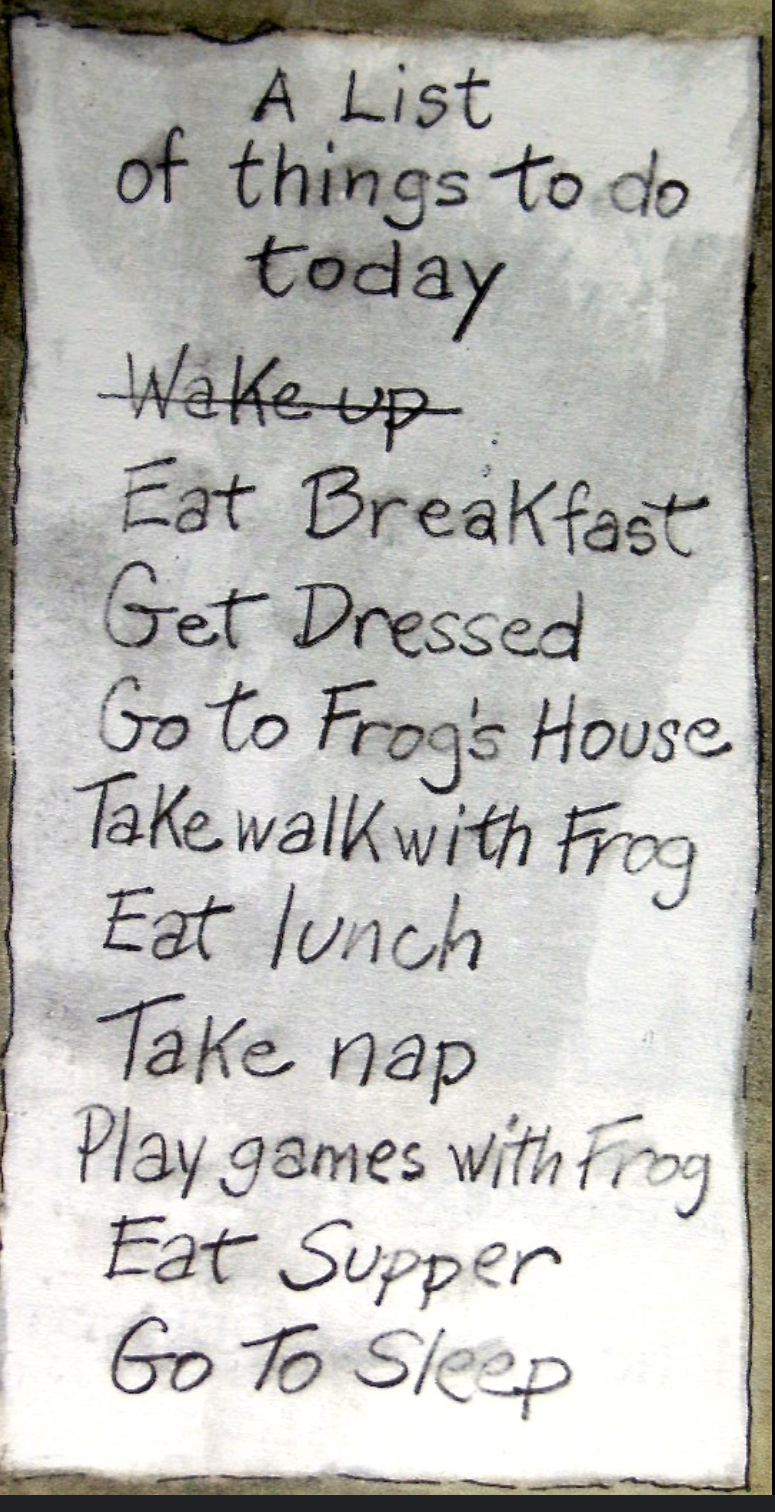
IMG_7676.jpeg
Daily pen and paper lists
A war in my name
IMG_7676.jpeg
participant
Posts: 26
Joined: Mon Apr 29, 2024 22:20 UTC
Joined: Mon Apr 29, 2024 22:20 UTC
Posted: Sat Feb 01, 2025 05:12 UTC
The first note I took on this phone:
Project unknown
IMG_7677.jpeg
Project unknown
IMG_7677.jpeg
eternement hana
Posts: 102
Joined: Mon Apr 29, 2024 22:21 UTC
Joined: Mon Apr 29, 2024 22:21 UTC
Posted: Sat Feb 01, 2025 22:26 UTC
ooh a new toy to try out…suro wrote:For personal research, journaling, and any form of sysadmin administration I need to do for my home network (writing down IP tables, processes, documenting my setup) I like to use Logseq. It's an Obsidian-like knowledge manager project, but it's FOSS. It's still quite early in its development, so I don't want to use it for anything that requires a lot of extensions, but I hope the project will grow and eventually bloom into a new standard for non-linear note taking.
it feels a bit roam-y, though the idea of centering daily journals as the main starting point for writing intrigues me as much as it worries me. i've written before about how i use obsidian to manage a set of notes that's structured more like a monolithic library, but its handling of daily notes feels a lot more limited. or maybe i don't really like how obsidian understands blocks and headings compared to how org-roam does and how logseq seems to. like, if i write a section in my journal that i later feel is worth keeping around, there's no way to index just that section from that day – i'd need to refactor it into its own note and then embed that chunk back into the daily. otherwise, i just have to remember that the section i like is tucked away inside "2024-05-22.md" or somesuch… and over time this limitation started to discourage me from keeping anything important in my daily notes.
it seems like it would be especially nice to self-host, but it looks like the docker version still uses a local directory for note storage despite people wanting a server-storage option for years… which is a shame. i recently set up mycorrhiza to play around with for this purpose, and even though it has a cute mascot, i've yet to try to use it for anything serious. it just feels too stiff to use for throwing around ideas.
unitary truant
Posts: 190
Joined: Sat Apr 27, 2024 22:57 UTC
Joined: Sat Apr 27, 2024 22:57 UTC
Posted: Thu Feb 27, 2025 23:34 UTC
This is currently in a state of flux for me. I'm considering publishing a notebook so that I can write shorter posts in a less "here's my full professional name" place, and remove some of my poems from that section and put it in the notebook instead. But so many other things are in flux that it kinda looks like this:
Daily logging
"What did I do? What do I want to do?" as well as high-level monthly goals are in a bullet journal, on paper.
Weekly logging
A jrnl .txt file. I tend to do longer monologues and assess what I'm feeling.
Long-term database
"What did I read? Who recommended it? What are the citations I care about?" are all in an Obsidian database, locally.
I migrate recommendations periodically over from the bullet journal -- if someone recommends me a book I will probably put it in there first since I have it on-hand.
Weirdly but importantly, books are the only thing in here because they're a very specific medium. Albums and music I catalogue on rym. Video games I catalogue on backloggd. Granted, "who recommended me music" is something I care a lot about but hey, on idea where to store that right now.
Recurring tasks
These are residually in an Omnifocus database -- but probably I could move out of it? I don't know yet. I wasn't using it at my last job, I would make a notepad entry and put my daily work items in it instead of GTD-ing it. GTD works better for me in a "juggling a lot of different contexts of life and in different modes of action" state where it matters if I can block off cross-context writing time or whatever.
Now, this mysterious notebook wiki thing?
I think it needs a philosophy of use or it will fail. It can duplicate the long-term private db if done improperly, but it should be seen as like, a longer microblog or something with an emphasis on interconnectivity. But while some people do daily notes and some people make encyclopedias, it's not clear to me how much I'll want that. I definitely have a missing "here's a smaller thought that doesn't need a ton of polish or citations" place. I alternate in and out of using Dreamwidth for this, but I'm not sure why it doesn't click right now... suggestions welcome here.
Daily logging
"What did I do? What do I want to do?" as well as high-level monthly goals are in a bullet journal, on paper.
Weekly logging
A jrnl .txt file. I tend to do longer monologues and assess what I'm feeling.
Long-term database
"What did I read? Who recommended it? What are the citations I care about?" are all in an Obsidian database, locally.
I migrate recommendations periodically over from the bullet journal -- if someone recommends me a book I will probably put it in there first since I have it on-hand.
Weirdly but importantly, books are the only thing in here because they're a very specific medium. Albums and music I catalogue on rym. Video games I catalogue on backloggd. Granted, "who recommended me music" is something I care a lot about but hey, on idea where to store that right now.
Recurring tasks
These are residually in an Omnifocus database -- but probably I could move out of it? I don't know yet. I wasn't using it at my last job, I would make a notepad entry and put my daily work items in it instead of GTD-ing it. GTD works better for me in a "juggling a lot of different contexts of life and in different modes of action" state where it matters if I can block off cross-context writing time or whatever.
Now, this mysterious notebook wiki thing?
I think it needs a philosophy of use or it will fail. It can duplicate the long-term private db if done improperly, but it should be seen as like, a longer microblog or something with an emphasis on interconnectivity. But while some people do daily notes and some people make encyclopedias, it's not clear to me how much I'll want that. I definitely have a missing "here's a smaller thought that doesn't need a ton of polish or citations" place. I alternate in and out of using Dreamwidth for this, but I'm not sure why it doesn't click right now... suggestions welcome here.
We don't care what you say but we care what you do.
We’re the invisible entity that looks out for you.